

We live in an age of no judgment. Expressive individualism is king, which Jaquelle Crowe defined this way:
This is the follow-your-heart, believe-in-yourself, chase-your-dreams, Disney-Hallmark-MTV gospel…You are the creator of your identity. You are free—even obligated—to be whomever or whatever makes you feel good, no matter what anyone says.[1]
This isn’t exactly an invitation for honest feedback. In our age, the greatest offense we could show someone is limiting their self-expression, which means any form of criticism may not only offend someone, it could jeopardize the friendship. Yet, we need friends who will speak honestly to us when we’ve gone astray and have endangered ourselves spiritually, emotionally, or even physically.
Actress Gwyneth Paltrow made a fascinating observation about fame:
Fame is such a weird and distorting thing. I’ve thought a lot about it, and my theory is that you kind of stop growing at the age you are when you become famous. Because what happens is, people start removing all your obstacles, and if you have no obstacles you don’t know who you are. You don’t have real perspective on the problems that face you in life, how to surmount them, and what kind of character you have.[2]
A culture that prohibits criticism has the effect of making everyone famous. People are not confronted with the problems in their life, the problems in their heart, the problems in their relationships, and as Ms. Paltrow says, they “stop growing.”
But one of the biggest problems about cutting ourselves off from criticism, is that it exposes us to dangerous blind spots.
In 1955, Psychologists Joseph Luft and Harrington Ingham developed a framework they named the Johari Window. It reveals what can be known about a person. The top left quadrant is what everyone knows about us, things like our job, our physical appearance, our marital status, etc. The bottom left quadrant is what we know about ourselves but keep hidden from others. The top right quadrant is what others know about us but we don’t, like how we are experienced by others, how talented or untalented we are to others in certain areas. The bottom right quadrant is what no one knows about us–not even us (God knows it all).
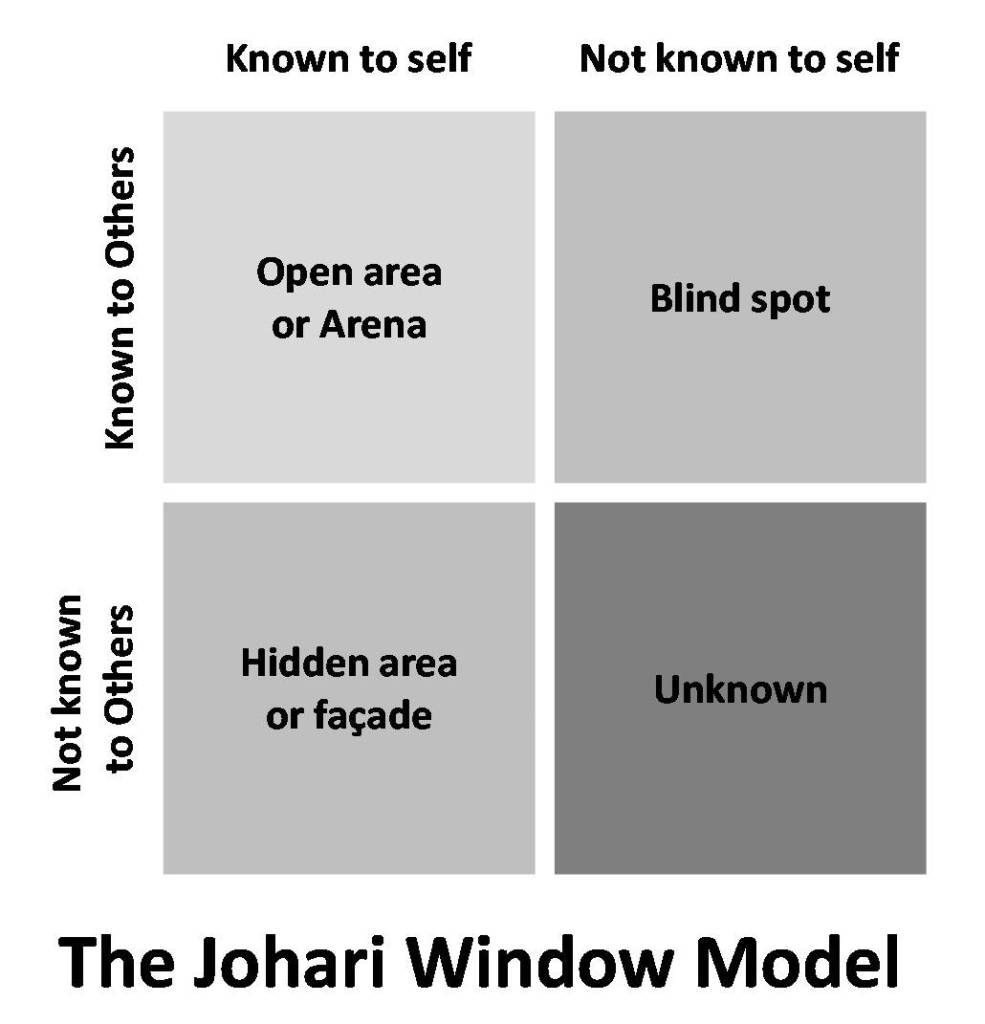
Notice then that no matter how well you think you know yourself, you only have access to 50% of the information about who you are! Know thyself? How can we without friends who will speak the truth in love? It is difficult, and it takes wisdom and godliness, but we must be that honest friend who is willing to share hard truth.
Loving correction is a gift we cannot live without. AI will tell us what we want to hear to keep us on the platform, affirming us even in the face of blatant wickedness, and some friends will do the same. But for Christians we feel sure of better things (Heb. 6:9). Be a friend and seek out friends who will be honest with you, that you might not stagnate in faith and life but flourish through the path of loving correction.
[1] Jaquelle Crowe, “How Youth Like Me Learn Expressive Individualism,” Christian Living, The Gospel Coalition, January 4, 2017, https://www.thegospelcoalition.org/article/how-youth-like-me-learn-expressive-individualism/.
[2] James Andrew Miller and Tom Shales, eds., Live from New York: An Uncensored History of Saturday Night Live (Back Bay Books, 2015). 520.
Did you find this article helpful? Consider subscribing so you don't miss any new content.

Mike McGregor
Mike McGregor (MDiv, Reformed Theological Seminary) is Director of College Ministry at First Baptist Church in Durham, N.C. You can follow him on Twitter at @m5mcgregor.


